AI Marketing Case Studies That Should Inspire Your 2025 Strategy

AI is transforming marketing in 2025, driving personalization, efficiency, and measurable results. Brands like Sephora, Netflix, Starbucks, and Formula 1 are leveraging AI to boost sales, improve engagement, and reduce costs. Key takeaways include:
- Sephora: Virtual try-on tools increased online sales by 20% and reduced returns by 30%.
- Netflix: AI-powered recommendations drive 80% of content consumption, saving the company $1 billion annually.
- Starbucks: Personalized offers via AI increased average check sizes by 12% and improved order accuracy to 99.2%.
- Formula 1: Unified fan data led to an 8% rise in satisfaction and doubled sponsorship revenue since 2019.
These examples highlight how AI can solve customer challenges, improve marketing ROI, and enhance personalization at scale. SaaS companies can apply similar strategies by unifying data, using AI for real-time personalization, and focusing on customer needs. SaaS founders can further optimize their operations by implementing a comprehensive AI tool stack to drive growth.
AI Marketing Success Stories: 6 Real-Life AI Case Studies
Case Study: Sephora's Virtual Try-On for Better Customer Engagement
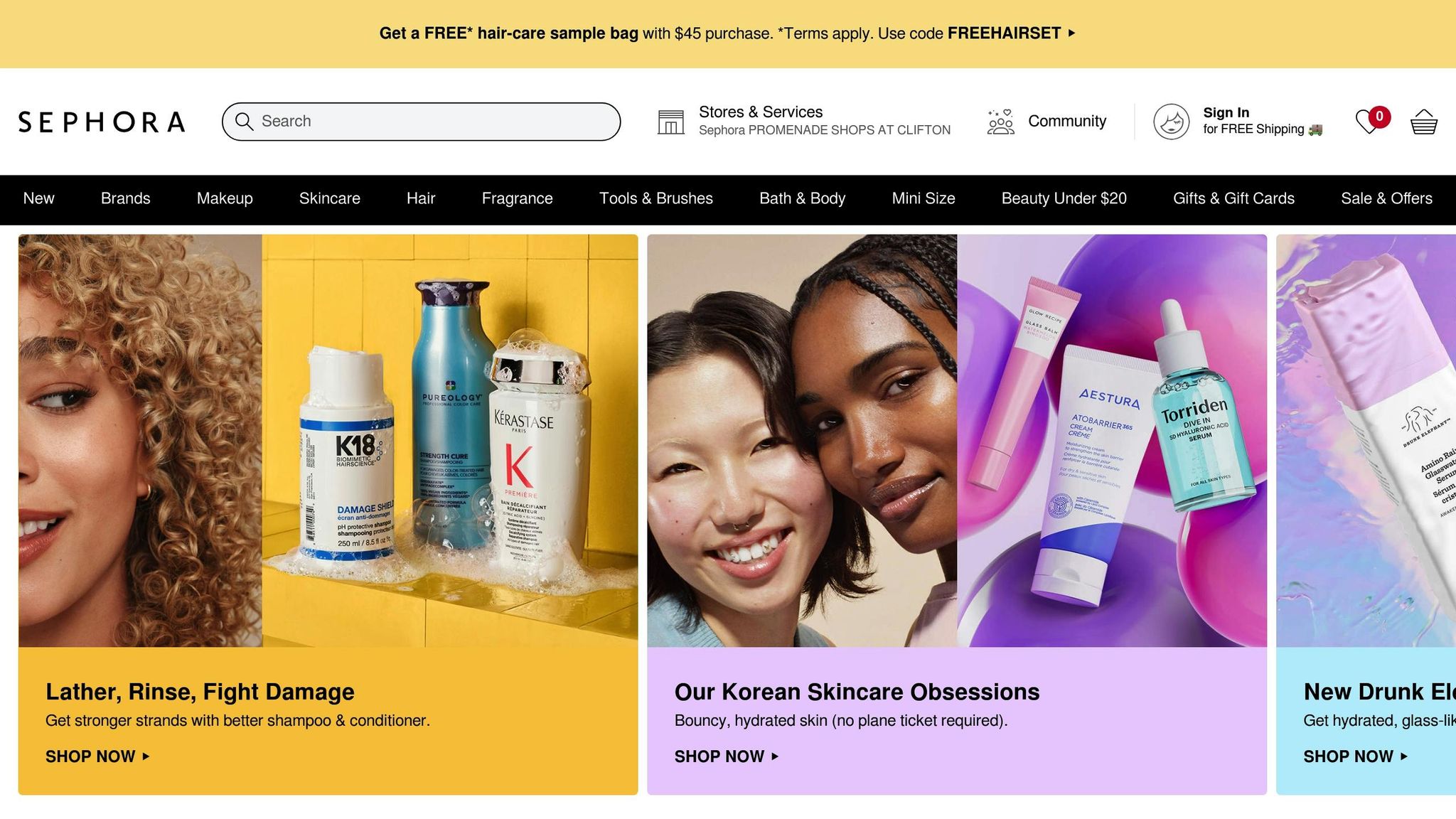
Sephora has completely reshaped the beauty shopping experience with its AI-driven virtual try-on tools, effectively bridging the gap between online and in-store shopping. Recognizing that many customers were hesitant to buy makeup online without trying it first, Sephora introduced a cutting-edge solution that not only boosted engagement but also drove sales.
AI Tools Sephora Used
At the heart of Sephora's AI strategy are three key technologies that create a seamless, immersive shopping experience. In 2016, Sephora partnered with ModiFace to launch Virtual Artist, an augmented reality tool that uses facial recognition and computer vision to map facial features and skin tone. This technology allows customers to virtually try on products like lipstick, foundation, and eyeshadow in real time.
Sephora also introduced Sephora Color Match, an AI-powered tool that analyzes skin tone to recommend the perfect foundation and concealer shades. Additionally, the Reservation Assistant, launched as a Facebook Messenger chatbot in late 2016, simplifies the process of booking in-store makeup appointments, creating a smooth connection between online and offline experiences.
To ensure personalized interactions at every touchpoint, Sephora utilized Google Cloud AI, Salesforce Marketing Cloud, and custom in-house solutions.
"Before Sephora, we would have to go to brands and try to motivate them and show them why technology could make sense for their business. Sephora has gotten it from day one, wanting and incorporating new ideas. It's great to have a partner that believes in technology." - Parham Aarabi, CEO of ModiFace [1]
Sales and Engagement Results
The results of Sephora's AI initiatives have been impressive and measurable. Customers who used the Virtual Artist tool were three times more likely to make a purchase compared to those who didn’t use the feature [2]. This significant increase in conversions directly contributed to revenue growth.
The virtual try-on feature also tackled a major issue in online beauty shopping - product returns. Sephora reported a 30% drop in returns for makeup products [2], as customers felt more confident in their choices after virtually seeing how products would look on them.
Customer engagement also soared. The average app session time jumped from 3 minutes to an impressive 12 minutes, reflecting a fourfold increase in user interaction [2]. By 2018, the Virtual Artist tool had been used to try on over 200 million shades, attracting more than 8.5 million visits [1].
Regional rollouts further showcased the success of these tools. Sephora Turkey saw a 35% increase in conversions with its AR try-on feature [4], while Sephora SEA reported a 28% rise in user adoption and a 48% boost in traffic to the Virtual Artist tool [5].
Sephora's Reservation Assistant also delivered strong results, increasing booking rates by 11% within two years of its launch and simplifying the appointment scheduling process [1]. Overall, these efforts helped drive massive growth in online sales, which skyrocketed from $580 million to $3 billion over six years [1].
"We believe the ability to see yourself with products can impact sales online. We now have significant data and test cases to back this up." - Parham Aarabi, CEO of ModiFace [3]
These results highlight the transformative potential of AI in improving customer experiences and driving business outcomes.
What SaaS Businesses Can Learn
Sephora’s success offers valuable lessons for SaaS companies aiming to integrate AI into their customer engagement strategies. Here are some takeaways:
- Solve specific customer pain points. Identify challenges your customers face and create AI solutions to address them. For example, personalized onboarding or interactive demos can simplify user experiences.
- Embrace omnichannel integration. Sephora’s seamless coordination of Virtual Artist, Color Match, and Reservation Assistant across its platforms demonstrates the importance of integrating AI tools across web, mobile, and in-person touchpoints.
- Leverage personalization. Use AI to personalize sales funnels by analyzing customer behavior and tailoring user experiences in real time, creating interfaces and content that meet individual needs.
- Collaborate strategically. Sephora’s partnership with ModiFace fast-tracked its AR capabilities without requiring a massive in-house investment. SaaS companies can adopt a similar approach for tackling complex challenges.
- Track meaningful metrics. Go beyond adoption rates and focus on engagement quality, such as session duration and conversion rates, to measure the true impact of your AI tools.
Case Study: Netflix's AI-Driven Personalization for Customer Retention

Netflix has mastered the art of AI-powered personalization to keep its massive subscriber base - 238 million strong - engaged and coming back for more. By tapping into the power of individual user preferences, Netflix has set a benchmark for reducing churn in today’s fiercely competitive entertainment industry.
How Netflix Uses AI for Content Recommendations
Netflix’s use of AI is a prime example of how technology can transform user experiences. By analyzing a treasure trove of data - like viewing habits, ratings, search queries, and engagement metrics - the platform uses deep learning, natural language processing (NLP), and advanced filtering techniques to deliver highly relevant content suggestions.
But it doesn’t stop at recommendations. Netflix even tailors the thumbnails you see, optimizing them based on click rates. Plus, it adjusts streaming quality on the fly to ensure a seamless viewing experience [6].
Back in 2013, Netflix showcased its AI prowess with the launch of House of Cards. By diving deep into viewer data and behavior, the company created multiple custom trailers, each designed to appeal to distinct audience segments.
"Consumer research suggests that a typical Netflix member loses interest after perhaps 60 to 90 seconds of choosing... The recommender problem is to make sure that on those two screens each member…will find something compelling to view."
– Carlos Gomez-Uribe, VP of Product Innovation, and Neil Hunt, Chief Product Officer, Netflix [13]
Netflix's AI Implementation Results
The results of Netflix’s personalization strategy are nothing short of impressive. Recommendations powered by AI account for 80% of the content viewed on the platform. This approach not only saves the company nearly $1 billion annually but also keeps churn rates low, hovering around 2.3–2.4%. Subscribers spend an average of 3.2 hours daily on the platform, collectively saving over 1,300 hours of search time every day [6] [7] [8] [9] [10] [11] [12].
In 2023, Netflix’s subscriber base grew by 8.9 million, bringing the total to approximately 238.4 million worldwide [7]. Research further highlights that effective personalization can improve customer satisfaction by 20% and increase conversion rates by 10–15% [7]. As Netflix CEO Reed Hastings put it:
"Over 75% of what people watch on Netflix is discovered through our recommendation system." [8]
These figures underscore how AI-driven personalization not only enhances user engagement but also gives Netflix a competitive edge in the crowded streaming market.
What SaaS Companies Can Apply
Netflix’s success offers a blueprint for SaaS businesses aiming to improve customer retention. Here’s how SaaS companies can integrate similar strategies:
- Gather detailed user interaction data: Build comprehensive user profiles to deliver personalized experiences across platforms [13].
- Adopt real-time personalization: Provide tailored dashboard setups, feature recommendations, or workflow adjustments based on live user behavior [13].
- Leverage AI for customer service: Use AI chatbots to handle routine tasks, potentially boosting customer satisfaction by up to 25% [13] [15].
- Predict user needs: Anticipate customer behavior to reduce churn by as much as 36% and increase satisfaction by 33% [14].
- Perfect timing in communication: Optimize the timing of onboarding processes, feature updates, and renewal reminders for maximum impact [14].
- Use behavioral triggers: Proactively manage relationships to prevent churn, which can result in a 10–15% increase in sales [14] [15].
Netflix’s approach emphasizes that personalization isn’t just a feature - it’s a strategy. By focusing on the entire customer journey and enhancing every interaction with AI, businesses can achieve remarkable retention outcomes.
Case Study: Starbucks' Personalized Marketing Through AI
Starbucks has embraced AI to craft a personalized marketing strategy that not only enhances customer engagement but also drives significant revenue growth. With nearly 25 million active Starbucks Rewards members contributing to over half of U.S. store transactions, the coffee giant demonstrates how AI-powered personalization can deliver measurable results for both businesses and customers alike [16].
How Starbucks Uses AI to Analyze Customer Data
At the heart of Starbucks' personalization efforts is its Deep Brew AI platform, which processes massive amounts of customer data to fuel targeted marketing campaigns. This system dives into purchase history, location data, visit times, seasonal trends, and even weather patterns to create tailored drink suggestions, exclusive discounts, and promotional offers [16][18].
The Starbucks mobile app acts as the centerpiece of this personalized experience. For example, a customer who frequently orders lattes might receive a timely promotion for a new seasonal drink or a breakfast combo [17]. Deep Brew also uses data to recommend products based on store inventory and customer preferences, while sending reminders to redeem rewards [17].
In early 2025, Starbucks introduced Green Dot Assist, a generative AI tool integrated into barista headsets and point-of-sale systems. Powered by large language models fine-tuned on beverage manuals and allergen guidelines, it provides accurate responses in under 200 milliseconds, making it an invaluable tool for enhancing service speed and precision [18].
These AI-driven approaches have laid a solid foundation for boosting both operational efficiency and customer satisfaction.
The Numbers Behind Starbucks' AI Success
The results of Starbucks' AI initiatives speak volumes. During pilot programs, the company saw:
- A 12% increase in average check size
- A 30% boost in ROI
- A 15% rise in customer engagement
Additionally, the Deep Brew platform played a key role in growing U.S. Rewards membership to 17.6 million by late 2019 [18][19][20].
The introduction of Green Dot Assist brought even more impressive outcomes:
- Improved order accuracy from 94% to 99.2%
- Eliminated 38 million drink remakes annually, saving $68 million in product costs
- Reduced drive-thru wait times by 14% (18 seconds)
- Increased food attachment rates by 7%, adding an estimated $410 million in revenue over nine months [18]
"Our work in AI is providing Starbucks the underlying predictive models, enabling us to fuel the great human reconnection by freeing up partners to do what they do best, connect with customers and deliver a world-class customer experience." – Kevin Johnson, Starbucks CEO [21]
Moreover, mobile orders now account for over 30% of U.S. transactions, highlighting how AI-powered personalization has driven digital engagement [22].
Lessons for SaaS Marketers
Starbucks' success offers practical takeaways for SaaS marketers looking to harness AI for growth:
- Gather detailed user data through behavioral segmentation: A robust data foundation is essential for effective personalization.
- Leverage real-time personalization: Tailor offers and content based on a user’s current actions or preferences.
- Use behavioral triggers: Starbucks encourages repeat visits by targeting customers nearing reward thresholds. SaaS companies can apply similar tactics, identifying users at risk of churning and offering timely interventions like onboarding tutorials or feature highlights.
- Enhance customer support with AI: Green Dot Assist shows how AI can improve service speed and accuracy. SaaS businesses can implement AI churn prediction tools and chatbots to handle product-related queries, boosting satisfaction while reducing support costs.
- Start small with pilot programs: Starbucks achieved a 12% increase in average check size by testing in select markets. SaaS companies can similarly pilot personalized features - like tailored email campaigns or in-app recommendations - before scaling.
The key is to balance personalization with value. When done thoughtfully, AI systems can improve user experiences, drive engagement, and significantly contribute to revenue growth. By focusing on efficiency and meaningful interactions, SaaS companies can replicate Starbucks' success in their own unique ways.
Case Study: Formula 1's Unified Fan Data for Real-Time Personalization
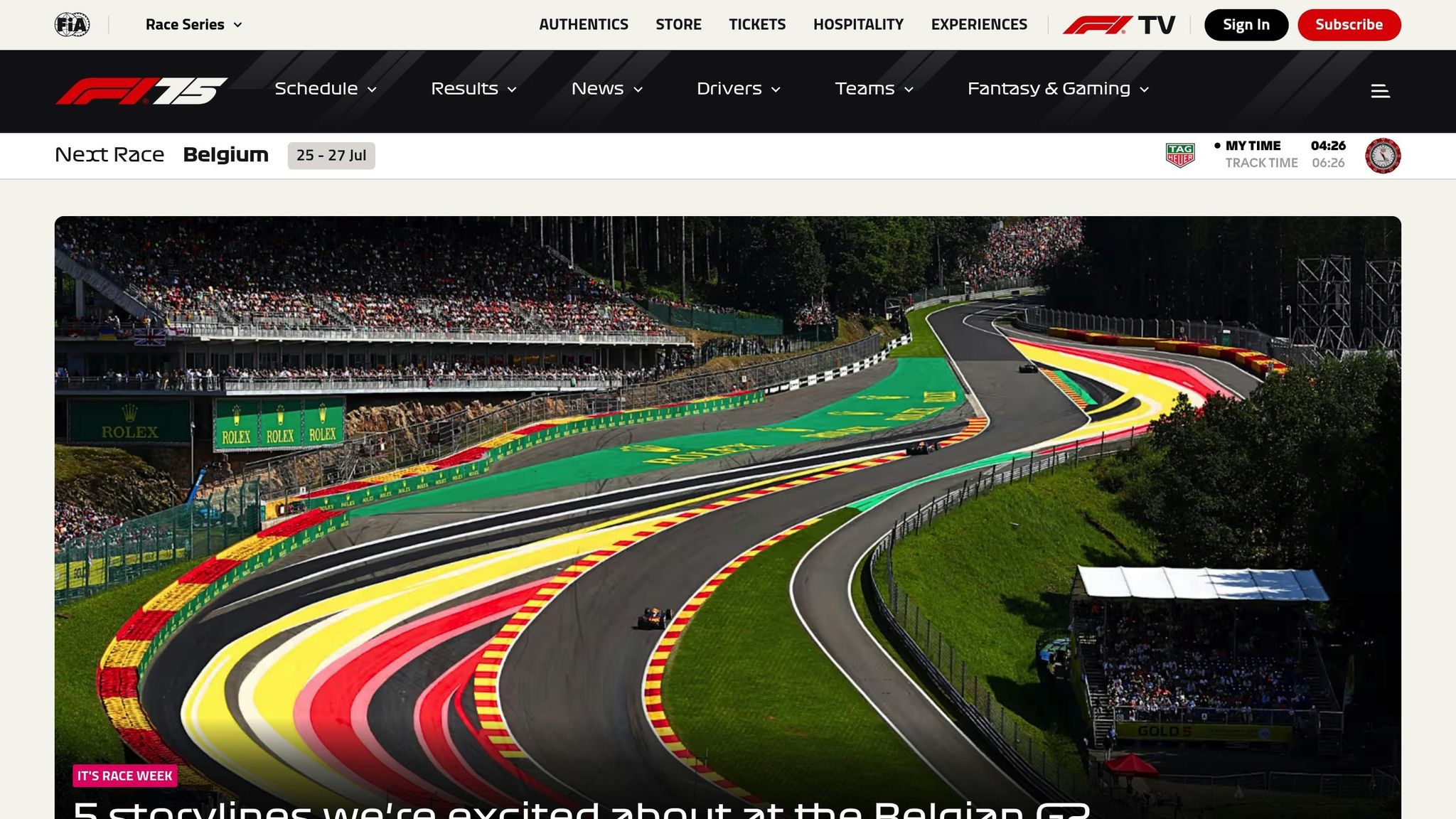
Formula 1 faced a major challenge: its fan data was scattered across more than 100 sources, making it nearly impossible to get a clear picture of its 800 million global viewers. With information spread across ticket sales, F1 TV streaming, fantasy leagues, merchandise platforms, and social media, the organization needed a way to unify this data and create tailored fan experiences on a global scale [25]. Enter AI-powered technology.
To tackle this, Formula 1 partnered with Salesforce to integrate its data and deliver personalized experiences that not only engaged fans but also boosted revenue.
How Formula 1 Harnessed Salesforce Einstein AI
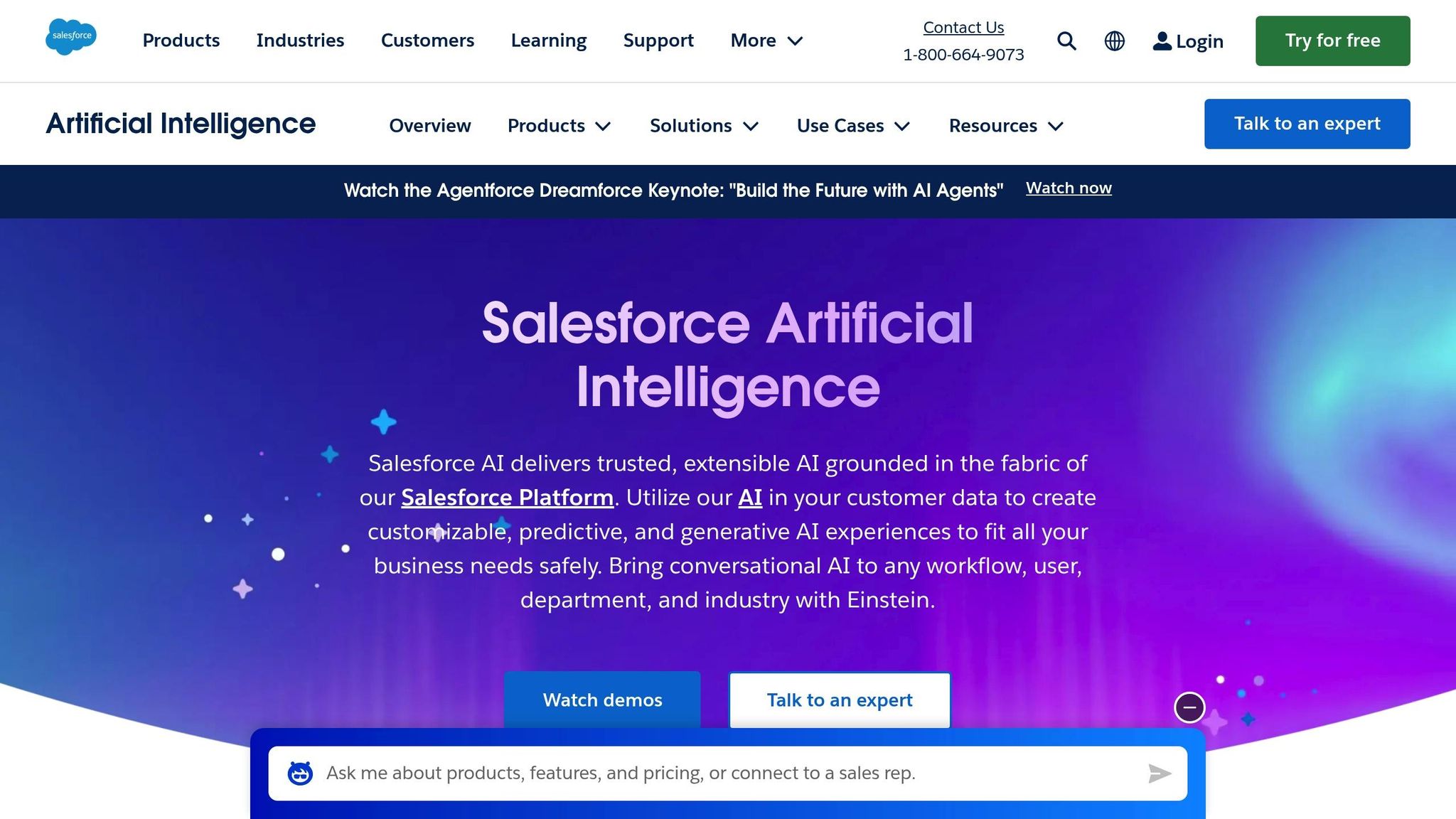
The transformation started with Salesforce Customer 360, a platform designed to merge data from multiple sources - like ticketing, streaming, fantasy leagues, and social media - into one comprehensive view of each fan [25]. By replacing a fragmented system, F1 made large-scale personalization a reality.
Salesforce Data Cloud played a key role by processing data from over 100 sources to build detailed fan profiles. From there, Einstein AI analyzed this data to predict fan behavior, allowing F1 to deliver timely and relevant content [25].
Another critical tool was Agentforce, Salesforce's AI-powered service platform. It ensured fans received fresh, engaging recommendations by tracking previously viewed content and avoiding repetitive suggestions, a common frustration that can lead to disengagement [23].
A standout example of this integration is McLaren Racing, one of F1’s iconic teams. McLaren uses Salesforce Marketing Cloud to send personalized emails and relies on Sales Cloud as its central CRM. Through MuleSoft's APIs, they combine fan data from various systems into a single record, gaining insights into fan preferences for drivers, races, and merchandise [24].
"We are on a journey to integrate Agentforce with our Service Cloud. This means fans will get support that's faster and more personalized than ever before."
– Matthew Kemp, Senior CRM & Customer Service Ops Manager, F1® [23]
Formula 1's Performance Results
The results of F1’s AI-driven transformation speak for themselves. The organization achieved a 22% increase in agent-generated content clicks, an 80% improvement in support response times, and a 50% reduction in call handling time, all contributing to an 8% year-over-year rise in fan satisfaction, now at 90% [23].
The business impact was equally impressive. Media rights revenue climbed from $606 million in 2017 to $1.18 billion in 2024, while sponsorship revenue doubled since 2019, reaching $632 million in 2024 [26].
On the digital front, F1’s strategy supercharged its social media growth. With over 96 million followers, it’s now the fastest-growing sport on social platforms. Its fanbase of 24 million known fans is projected to nearly double to 43 million by 2027, thanks to AI-driven personalization [27].
"Leveraging Salesforce technology, we are able to create extraordinary fan experiences by delivering personalized engagement at scale. With a growing, diverse fanbase, Salesforce has become a trusted partner in helping us strengthen connections with our fans and elevating their experience across every touchpoint."
– Donna Birkett Baida, Director of Marketing, Formula 1 [27]
McLaren Racing's CEO, Zak Brown, emphasized the importance of this technology shift:
"If you stand still in our sport, you're actually going backwards. Through our partnership with Salesforce, we can efficiently build one-to-one relationships with millions of passionate fans around the world." [24]
Lessons for SaaS Businesses
Formula 1’s success offers valuable insights for SaaS companies looking to enhance customer engagement through data and AI:
- Centralize Your Data Sources: F1’s journey began by unifying data from over 100 sources. SaaS companies should audit their data - spanning support tickets, product usage, billing, and marketing interactions - to create a single customer view.
- Scale Personalization in Real Time: F1 delivers relevant content to millions without losing its personal touch. SaaS businesses can use behavioral triggers to craft tailored in-app experiences, emails, and product recommendations.
- Anticipate Customer Needs: F1’s 80% faster response times highlight the value of predictive customer service. SaaS companies can adopt similar models to identify and address user needs before they escalate.
- Optimize Content with AI: The 22% boost in content clicks shows how AI can refine messaging for specific audiences. SaaS marketers can apply this to blog posts, feature updates, and educational materials.
- Build Customer Profiles Gradually: Instead of overwhelming users with lengthy forms, collect insights through ongoing interactions, like product usage and support inquiries.
The big takeaway? real-time data integration is the foundation for effective personalization. Without a complete view of customer interactions, even the most advanced AI tools will fall short. SaaS companies that prioritize data integration will be better equipped to use AI for boosting engagement and driving growth.
AI Marketing Benefits and Challenges Comparison
Reflecting on the success stories of Sephora, Netflix, Starbucks, and Formula 1, it's clear that AI marketing offers transformative results. However, these successes also come with a unique set of challenges. This section breaks down the benefits and hurdles, helping SaaS companies assess the trade-offs of adopting AI in their marketing strategies.
Benefits vs. Challenges Table
| Case Study | Key Benefits Achieved | Main Challenges Faced |
|---|---|---|
| Sephora | • 20% boost in online sales • 15% improvement in customer retention • Enhanced virtual try-on experiences |
• Integrating data from multiple touchpoints • Ensuring diverse, inclusive AI recommendations • Balancing privacy expectations with personalization |
| Netflix | • Better personalized recommendations, enhancing viewer satisfaction • Faster content discovery |
• Managing massive real-time data • Avoiding bias in content suggestions • Maintaining diversity in personalization efforts |
| Starbucks | • Tailored offers driving higher engagement • Streamlined inventory management • Strengthened loyalty through targeted campaigns |
• Unifying data from apps, stores, and loyalty programs • Preserving customer trust in data practices • Training staff to utilize AI insights effectively |
| Formula 1 | • Increased digital engagement • Faster customer support • Significant growth in media rights revenue |
• Merging data from various sources • Scaling personalized experiences globally • Managing real-time data during live events |
AI’s impact is clear: companies using it for personalization report up to a 20% increase in engagement, while those leveraging it for sales have seen revenue grow by as much as 30%. AI teams have also achieved a 76% rise in win rates and shortened deal cycles by 78% [29][28].
Overcoming Challenges
While the benefits are substantial, they don't come without effort. One of the most common hurdles across these case studies is data integration. Unifying online and offline experiences or consolidating fragmented data into a single customer view requires significant investment. However, this effort can cut data processing times by up to 80% [29].
Another pressing issue is privacy and ethics. As Christina Inge, author of Marketing Analytics: A Comprehensive Guide, points out:
"There is a saying going around now - and it is very true - that your job will not be taken by AI. It will be taken by a person who knows how to use AI. So, it is very important for marketers to know how to use AI." [30]
This highlights a skills gap. While 71% of sales professionals use AI tools to boost conversions by 32% [28], many companies lack the expertise to effectively combine AI with marketing strategies.
Resource Allocation and Algorithm Bias
Strategic resource allocation is another critical factor. Companies using AI for marketing automation have reduced costs by up to 25% [29]. The key takeaway from these case studies? Start small and scale gradually.
Algorithm bias also presents a significant challenge, particularly for organizations with diverse customer bases. Ensuring AI systems deliver fair, inclusive recommendations requires ongoing oversight and fine-tuning.
Looking ahead, 75% of sales organizations are projected to adopt AI-powered tools by 2025 [28], with the AI market in sales and marketing expected to hit $4.1 billion by 2027 [29]. Businesses that address these challenges head-on will position themselves for long-term success in an increasingly AI-driven landscape.
Key Takeaways for SaaS Marketers in 2025
Case studies from brands like Sephora, Netflix, Starbucks, and Formula 1 highlight how strategic AI use - focused on solving customer challenges - can deliver measurable success. These real-world examples showcase the potential of AI in transforming marketing efforts.
Common Success Patterns Across Case Studies
Personalization delivers results: A staggering 87% of SaaS companies report higher growth when using AI-powered, scalable personalization [31]. But it’s not just about using names in emails - it’s about analyzing customer behavior to deliver the right offer at the perfect moment.
Real-time data is a game-changer: Combining historical data with live insights is key. Formula 1’s live race personalization and Starbucks’ dynamic inventory management are prime examples of how real-time data can set businesses apart [31].
Customer-first strategies outperform tech-first approaches: These companies didn’t start with flashy tools; they began by solving customer pain points. Sephora tackled the challenge of trying makeup online, and Netflix simplified the overwhelming task of finding content. This focus on customer needs consistently leads to better outcomes.
Video content enhances AI-driven personalization: Video has proven to boost engagement. Dropbox’s "Work in Progress" series, for example, effectively showcases product features while keeping users engaged [31].
These patterns provide a roadmap for actionable strategies that SaaS marketers can adopt right away.
Next Steps for SaaS Companies
Building on these insights, here are some practical steps to consider. Forward-thinking leaders emphasize that AI is here to complement human decision-making:
"We are moving from the era of people using many applications to the era of AI agents doing the work for you." [32]
This shift demands immediate and thoughtful action:
- Unify customer data from all sources to identify the best moments for personalized engagement [33].
- Use AI-driven chat tools at critical points like pricing pages and demo forms. Train these bots with real FAQs and sales conversations to ensure they genuinely add value [34].
- Automate repetitive but impactful tasks such as email campaigns, ad optimization, and lead segmentation. Free up your team for strategic efforts by automating lead data collection and subscriber sign-ups [33].
- Focus on lead scoring and pipeline management: Leverage AI to dynamically score leads based on real-time behaviors and historical data. With 91% of marketers prioritizing lead generation, targeting high-potential prospects is crucial [33][34].
- Be transparent about AI usage: While only 28% of people fully trust AI, 69% appreciate personalization when they’ve given consent for data sharing. Clear communication and opt-out options can help build trust [33].
- Test and measure consistently: Start small - pick one repetitive task and run a two-week pilot with an AI tool. Set measurable goals, like time saved or improved accuracy, and track the results [34].
The best-performing companies treat AI as a tool to enhance human decision-making, not replace it. Thoughtfully applied, personalized marketing strategies can boost conversion rates by 10–15% [33]. To get started, identify a time-consuming manual task, test an AI solution, and measure its impact. This step-by-step approach mirrors the strategies behind the success stories and positions your SaaS company for bigger AI-driven initiatives in 2025.
FAQs
How can small businesses use AI in their marketing strategies without spending a lot of money?
Small businesses can tap into the power of AI in their marketing efforts by beginning with budget-friendly or free tools. Options like chatbots, email automation platforms, and social media schedulers are great starting points. Many of these tools come with free plans or affordable subscriptions, making them accessible even for businesses with tight budgets.
The key is to focus on AI tools that save time and enhance customer interactions. For instance, chatbots can handle common customer questions, freeing up time for your team. Email automation can personalize campaigns, helping you connect with your audience more effectively. Meanwhile, AI-powered analytics tools can provide insights into performance, helping you make smarter decisions about where to allocate your marketing budget - all without requiring hefty upfront costs.
Taking a gradual approach - starting small and scaling up as you see results - allows businesses to explore AI’s benefits while keeping expenses under control.
What challenges do companies face when implementing AI in marketing, and how can they address them?
Businesses face a variety of hurdles when implementing AI in marketing, including data privacy concerns, ethical challenges like bias or manipulation, overdependence on automation, and integration roadblocks. If not handled carefully, these issues can undermine the effectiveness of AI tools and strategies.
To overcome these obstacles, companies should focus on strengthening data security and adhering to privacy laws. Building trust with customers requires transparency in AI processes and efforts to minimize bias. Keeping human oversight in the loop ensures ethical decisions, while enhancing data quality and investing in smooth system integration unlocks AI's full potential. By addressing these challenges directly, businesses can harness AI to achieve impactful marketing outcomes.
How does AI-driven personalization adapt to industries like retail, streaming services, and sports entertainment?
AI-driven personalization adapts to the specific needs of various industries, transforming customer experiences in meaningful ways:
- Retail: By analyzing customer behavior, AI enables tailored shopping experiences. It suggests products, fine-tunes pricing strategies, and designs targeted marketing campaigns to match individual preferences.
- Streaming Services: AI takes content recommendations to the next level, offering viewers curated shows and movies based on their tastes and viewing habits, creating a more engaging experience.
- Sports Entertainment: AI boosts fan interaction with personalized content, interactive features, and real-time analytics. It also advances custom sports equipment and broadcasting innovations, strengthening fan loyalty while increasing revenue.
Across these industries, AI is reshaping how businesses connect with their customers, becoming an essential tool for growth and engagement in today's marketing landscape.